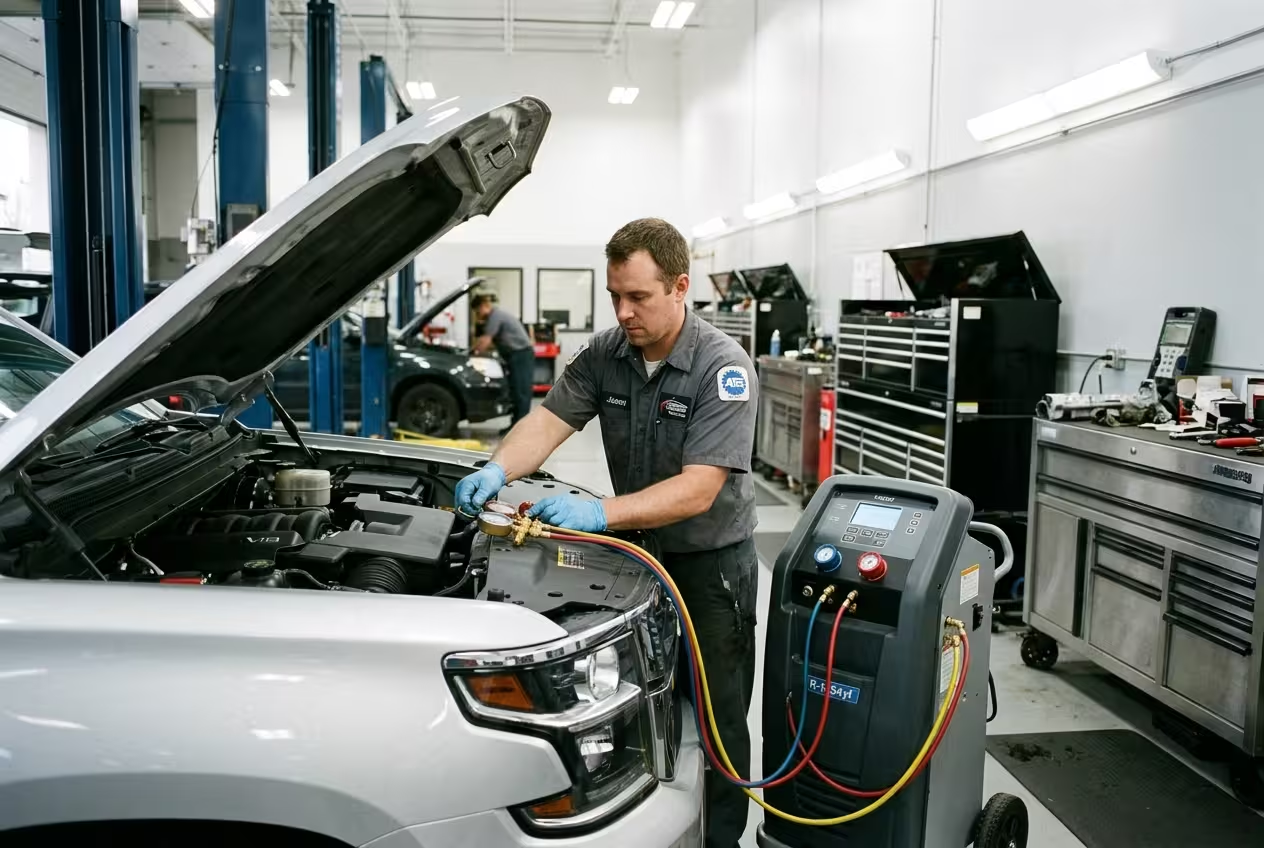
Stepping into a hot cabin on a 95°F afternoon is miserable when your dashboard vents only blow warm air. If you are asking how much does car air conditioning repair cost, standard US shop prices range from $100 to $3,000+ in 2026. Basic leak inspections and refrigerant recharges cost $150 to $500, while major compressor or evaporator replacements run $1,000 to $3,000.
According to ASE service guidelines, automotive air conditioning operates as a sealed, high-pressure refrigeration loop. Two vehicles with identical warm-air symptoms can require completely different parts and labor hours. This guide breaks down component prices, refrigerant types, diagnostic steps, and how to read a local mechanic’s estimate.
Quick Summary: Key Takeaways for US Drivers
Diagnostic & Minor Service ($100–$400): Professional UV dye and pressure diagnostics cost $100 to $250. Replacing a clogged cabin air filter ($25–$100) or faulty pressure cycling switch ($150–$350) resolves many airflow and engagement issues.
Refrigerant Evacuate & Recharge ($150–$600): Older vehicles using R-134a refrigerant cost $150 to $300 to recharge. Newer models (2018+) using R-1234yf gas cost $300 to $600 due to higher chemical and equipment costs.
Mid-Range Component Repairs ($250–$1,500): Replacing leaking refrigerant hoses ($250–$750), cabin blower motors ($200–$650), or damaged front condensers ($500–$1,500) requires system evacuation and vacuum testing.
Major AC Overhauls ($1,000–$3,000+): Replacing a seized AC compressor kit costs $1,000 to $2,500+. Dashboard evaporator core replacement costs $1,200 to $3,000+ because technicians must remove the instrument panel.
Safety & Legal Rule: According to EPA Section 609 regulations, venting refrigerant into the air is illegal; shops must recover existing gas and pull a deep vacuum before recharging.
What Is the Average Car AC Repair Cost by Component?
Average car air conditioning repair costs range from $150 for minor seal or sensor replacements to $2,500 or more for complete compressor kit overhauls. According to industry standard flat-rate labor guides, shop labor rates across the United States average between $120 and $185 per hour in 2026. Total invoice prices depend on part accessibility and refrigerant capacity.
Every repair that opens the sealed refrigerant loop adds two mandatory service steps. Technicians must first pump out any remaining refrigerant using an EPA-approved recovery machine. After installing the new part, the shop must pull a vacuum for 30 to 45 minutes and recharge the loop by weight in ounces.
| AC Repair or Service Type | Typical Parts Cost (USD) | Estimated Shop Labor (Hours) | Total Estimated Cost (USD) | Primary Failure Symptom |
| AC Performance & UV Leak Diagnostic | $0–$25 (UV dye) | 1.0–1.5 hrs | $100–$250 | Warm air, cycling clutch, unknown leak source |
| Evacuate & Recharge (R-134a System) | $40–$90 | 1.0–1.5 hrs | $150–$300 | Gradual cooling loss in pre-2018 vehicles |
| Evacuate & Recharge (R-1234yf System) | $150–$300 | 1.0–1.5 hrs | $300–$600 | Gradual cooling loss in 2018+ vehicles |
| Schrader Valve or O-Ring Seal Replacement | $10–$40 | 1.0–2.5 hrs | $150–$450 | Hissing service port, oily residue at pipe joints |
| AC High/Low Pressure Hose Assembly | $60–$250 | 1.5–3.0 hrs | $250–$750 | Wet, greasy rubber crimps; rapid refrigerant loss |
| Pressure Cycling Switch or Temp Sensor | $35–$150 | 0.5–1.5 hrs | $150–$450 | Compressor clutch never engages despite full charge |
| Cabin Blower Motor or Resistor | $80–$300 | 1.0–2.5 hrs | $200–$650 | Fan works only on high speed or stops blowing |
| HVAC Blend Door Actuator | $40–$200 | 1.0–6.0 hrs | $150–$1,100 | Clicking behind dash; vents stuck on hot air |
| Expansion Valve (TXV) or Orifice Tube | $50–$200 | 2.0–4.5 hrs | $250–$900 | Frost on suction line; intermittent warm air |
| AC Condenser Replacement | $200–$600 | 2.0–4.5 hrs | $500–$1,500 | Puncture from road debris; poor cooling at idle |
| AC Compressor + Receiver-Drier Kit | $450–$1,200 | 3.0–6.0 hrs | $1,000–$2,500+ | Loud grinding noise, seized clutch, zero cooling |
| Evaporator Core Replacement (In-Dash) | $150–$500 | 8.0–14.0 hrs | $1,200–$3,000+ | Chemical smell in cabin; oily water from drain tube |
What Causes Car Air Conditioning Repair Costs to Vary So Widely?
Four technical factors drive the price gap between a $200 repair and a $2,800 overhaul: refrigerant chemistry, internal metal contamination, dashboard labor hours, and high-voltage electric compressors. Understanding these mechanical systems helps you verify why a repair shop recommends specific parts.
How Does R-134a vs. R-1234yf Refrigerant Affect Your Bill?
Vehicles manufactured between 1995 and 2017 typically use HFC-134a (R-134a) refrigerant. Bulk R-134a costs shops roughly $1 to $2 per ounce. Recharging a standard 16-to-24-ounce passenger car system adds only $40 to $90 in materials.
Starting around 2018, automakers transitioned to HFO-1234yf (R-1234yf) to meet federal environmental standards under the U.S. EPA Section 609 Motor Vehicle Air Conditioning program. R-1234yf breaks down in the atmosphere in days rather than years, but the gas costs 4 to 6 times more per pound than R-134a. According to SAE J2843 equipment standards, R-1234yf recovery machines must also run automated refrigerant purity analyses before recharging, which increases shop service time.
Why Do Mechanics Replace the Condenser and Drier With a Bad Compressor?
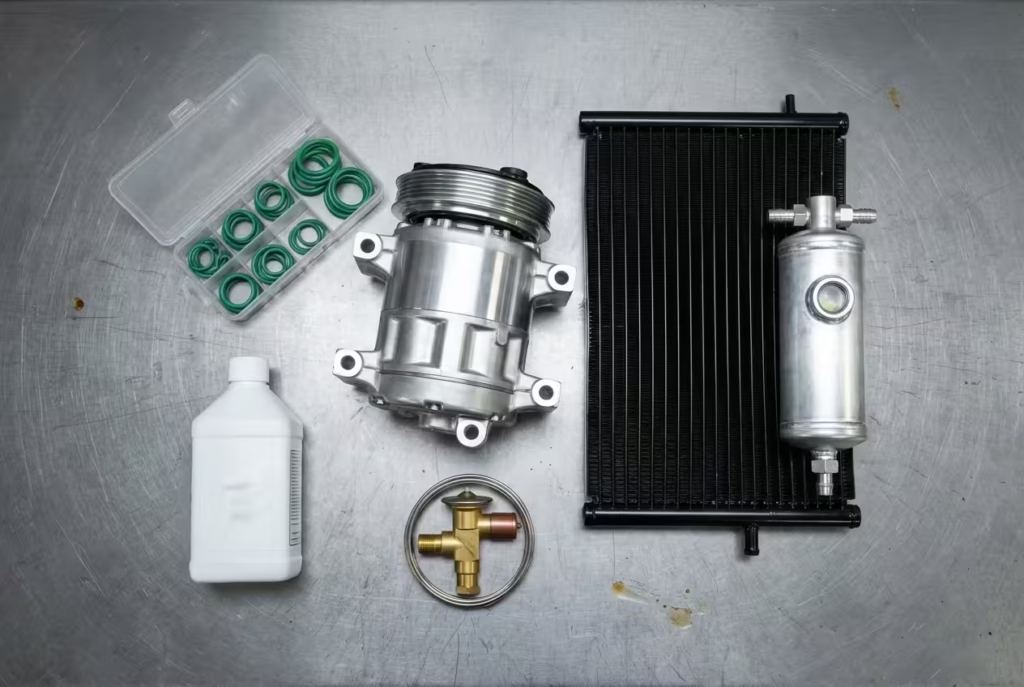
Drivers often suspect upselling when a mechanic quotes $1,800 to replace a compressor, condenser, expansion valve, and receiver-drier all at once. In reality, industry standard procedures require replacing these parts together after an internal compressor failure.
When a piston or scroll compressor seizes internally, it grinds aluminum and steel shavings into the refrigerant oil. The compressor pumps this metallic sludge directly into the condenser mounted in front of the radiator. Modern vehicles use micro-channel, parallel-flow condensers with passages narrower than a millimeter.
According to Mobile Air Climate Systems Association (MACS) service guidelines, technicians cannot flush metal debris out of a parallel-flow condenser. If a shop bolts a new $500 compressor onto a contaminated system, trapped metal flakes will wash back into the new compressor and destroy it within weeks. Almost all aftermarket and OEM parts manufacturers void the compressor warranty unless the invoice shows a new condenser, receiver-drier (or accumulator), expansion device, and chemical line flush.
Why Does a $200 Evaporator Core Cost $2,000+ to Replace?
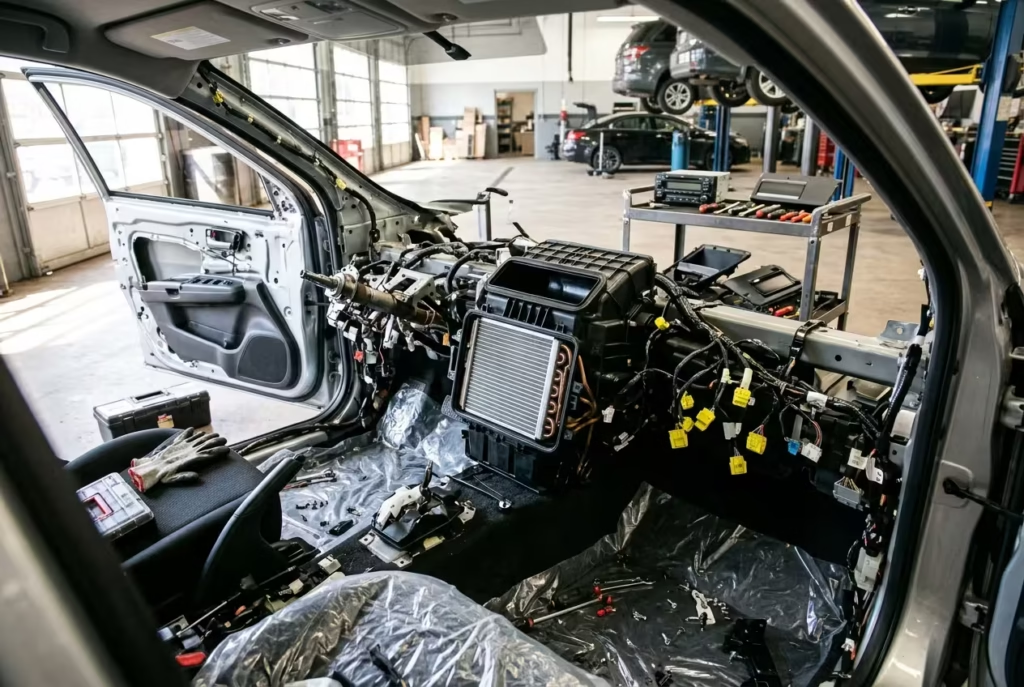
The evaporator core is a small aluminum heat exchanger that sits sealed inside the plastic HVAC plenum box beneath your dashboard. While the part itself costs $150 to $500, getting to it is one of the most labor-intensive jobs in auto repair.
According to OEM service manuals, replacing an evaporator core requires 8 to 14 hours of flat-rate labor. A technician must evacuate the refrigerant, drain the engine coolant, disconnect the battery, drop the steering column, unbolt the center console, and remove the entire dashboard assembly. Because dash removal disturbs airbag wiring and climate actuators, hiring a shop with ASE A7 Heating and Air Conditioning certification prevents broken plastic clips and electrical rattles.
Do Hybrid and Electric Vehicles Cost More to Repair?
Gasoline engines spin the AC compressor using a rubber serpentine belt connected to the crankshaft pulley. Hybrid and battery-electric vehicles (EVs) eliminate the belt drive and use a high-voltage (300V to 800V) electric scroll compressor.
Electric compressors cost $800 to $2,000 for the part alone. Furthermore, according to SAE J639 safety standards, high-voltage compressors require non-conductive Polyolester (POE) lubricant rather than standard Polyalkylene Glycol (PAG) oil. Using standard PAG oil inside a hybrid compressor causes electrical current to leak into the compressor housing, triggering hybrid powertrain fault codes and shutting down the vehicle.
How Can You Diagnose Car AC Problems by Symptom?
Diagnosing car air conditioning problems starts with matching your cabin symptoms—such as warm air at idle, clicking noises, weak airflow, or chemical odors—to specific mechanical or electrical subsystems. Checking these patterns before visiting a shop helps you describe the exact failure condition to your service advisor.
1. AC Blows Warm Air Immediately (Or Only Cools on the Highway)
If the air never gets cold, the compressor clutch is likely disengaged. According to ASE diagnostic procedures, a low-pressure cutoff switch prevents the compressor from turning on when refrigerant pressure drops below roughly 20 to 25 PSI. This safety feature stops the compressor from running dry without oil.
If the vents blow warm while stopped at a red light but turn cold at 50 MPH, your refrigerant charge may be intact. Instead, check the electric condenser cooling fan behind the front grille. Without fan airflow at idle, high-side condenser pressure spikes above 300 PSI, and the system cannot shed heat.
2. AC Blows Ice Cold for 15 Minutes, Then Turns Warm
Intermittent cooling usually points to moisture freezing inside the system or a worn compressor clutch. If air enters the loop during an improper recharge, water droplets freeze inside the narrow tip of the thermostatic expansion valve (TXV). Ice blocks refrigerant flow until you turn the AC off and let it thaw.
Another common cause is an excessive compressor clutch air gap. As the electromagnetic clutch face wears down past 0.030 inches, heat under the hood increases electrical resistance in the field coil. The magnet loses grip once hot, and the pulley freewheels until the engine bay cools down.
3. Grinding, Squealing, or Clicking Sounds When AC Is On
A loud metallic screech or rattle from the engine bay when you press the AC button indicates a failing compressor clutch bearing or internal piston damage. Conversely, a rhythmic plastic knocking or clicking noise behind the glovebox points to a stripped gear inside an electric blend door actuator. You can isolate actuator faults without removing the dash by using a bi-directional OBD2 scanner that reads HVAC trouble codes.
4. Weak Airflow From Vents Despite Cold Temperature
When the air feels cold at the vent louvers but barely reaches the back seat, the refrigeration loop is working properly. The restriction sits in the cabin air distribution path.
Start by inspecting the cabin air filter behind the glovebox, which takes 10 minutes and costs $20 to $60. If the filter is clean, a failing blower motor resistor or pulse-width modulation (PWM) control module may be locking the fan into low speed.
5. Musty Mildew Odor vs. Sweet Chemical Smell
A damp, locker-room smell when you first start the car comes from bacteria and mold growing on the wet fins of the evaporator core. Often, leaves or spiders clog the rubber evaporator drain tube underneath the passenger floorboard, trapping standing water inside the dash box. A local repair shop can clear the drain tube with compressed air and apply an antimicrobial evaporator foam treatment for $75 to $150.
A sharp, sweet, chemical odor accompanied by a greasy film on the inside of the windshield is more serious. According to OEM service bulletins, that smell indicates refrigerant and PAG oil leaking directly out of a cracked evaporator core into the passenger cabin.
Are DIY AC Recharge Cans Safer or Cheaper Than a Professional Shop?
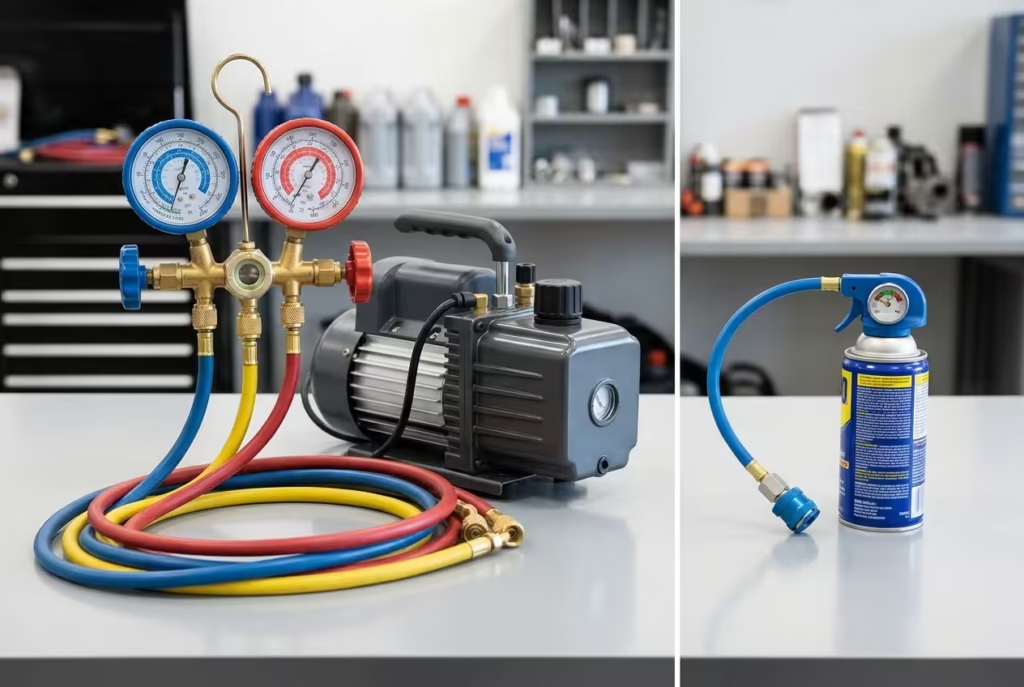
DIY recharge cans cost $40 to $85 at auto parts stores, making them cheaper upfront than a $150 to $300 professional shop recharge. However, industry standard service procedures warn that single-hose recharge cans cannot remove moisture, measure high-side pressure, or fix underlying leaks. Using the wrong additive can turn a minor $200 O-ring repair into a $2,000 system replacement.
Consider these three mechanical trade-offs before connecting a parts-store recharge can:
- Single Low-Side Gauges Cannot Read Head Pressure: A DIY can only clips onto the low-pressure service port. According to ASE A7 testing standards, diagnosing an AC charge requires reading high- and low-side pressures with a manifold gauge set simultaneously. If a clogged condenser fan or restricted expansion valve causes high-side pressure to spike while low-side pressure reads low, adding more refrigerant can rupture a hose or blow out the compressor’s pressure relief valve.
- Moisture Creates Corrosive Acid Inside the Loop: If refrigerant leaked out of your AC system, humid outside air leaked in. Professional mechanics remove that moisture by pulling a deep vacuum on an automotive AC system down to 29 inches of mercury (inHg) for 30 to 45 minutes. Pushing refrigerant from a can into a system containing air and moisture causes chemical breakdown, forming hydrochloric and hydrofluoric acids that eat through aluminum evaporator tubes from the inside.
- Stop-Leak Additives Ruin Shop Equipment and Valves: Many retail recharge cans advertise “leak sealer” or “stop-leak” chemicals. These polymers harden when exposed to moisture and air. Unfortunately, they frequently solidify inside your vehicle’s expansion valve and contaminate the $6,000 recovery machines used by professional repair shops. Many local auto shops test incoming refrigerant with an electronic analyzer and refuse to service vehicles contaminated with stop-leak unless you pay for a complete component replacement.
How Should You Read an Auto AC Repair Estimate From a Local Shop?
A trustworthy auto AC repair estimate itemizes diagnostic fees, exact refrigerant weight in ounces or pounds, compressor oil charges, OEM or aftermarket part numbers, and flat-rate labor hours. Comparing independent repair specialists against franchise dealerships can save vehicle owners 25% to 40% on total repair costs.
When reviewing a written quote from a local mechanic or auto AC specialist, verify these four details:
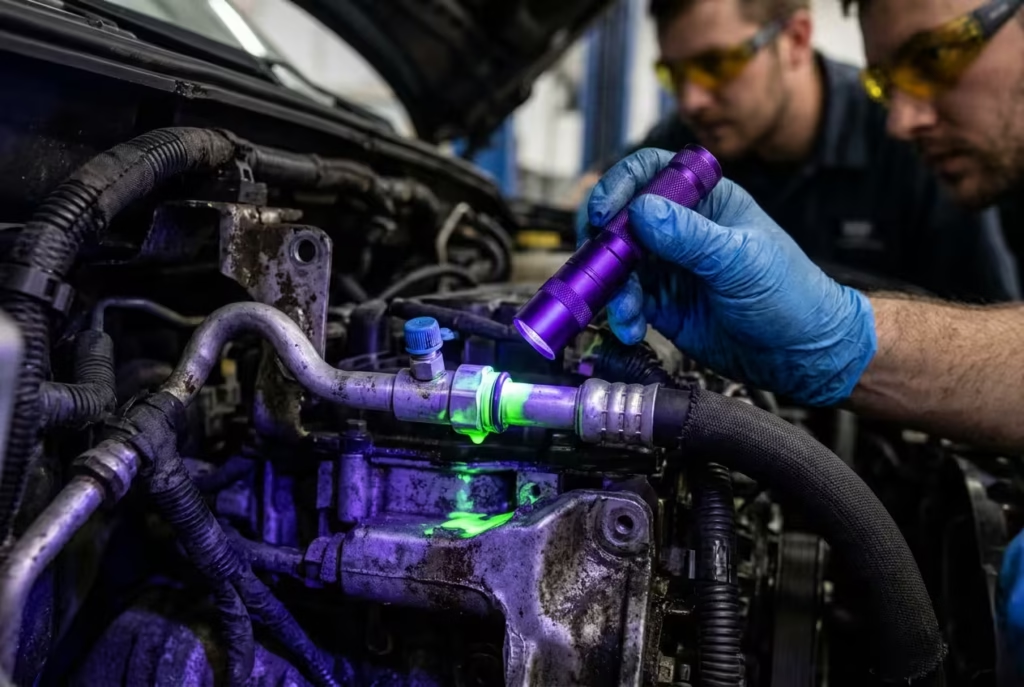
- UV Dye and Electronic Leak Verification: Ask whether the shop confirmed the leak using an electronic sniffer (calibrated to SAE J2791 standards) or ultraviolet (UV) fluorescent dye. If a slow leak cannot be spotted immediately, a reputable shop will recharge the system with UV dye and schedule a free 1-week follow-up inspection under a blacklight before quoting major parts.
- System Kit Bundling on Compressor Jobs: If your compressor failed, make sure the estimate includes a new condenser, receiver-drier, expansion valve, and system flush. A shop that quotes $650 to swap only the compressor is skipping required contamination steps, which puts you at risk of a repeat failure outside warranty.
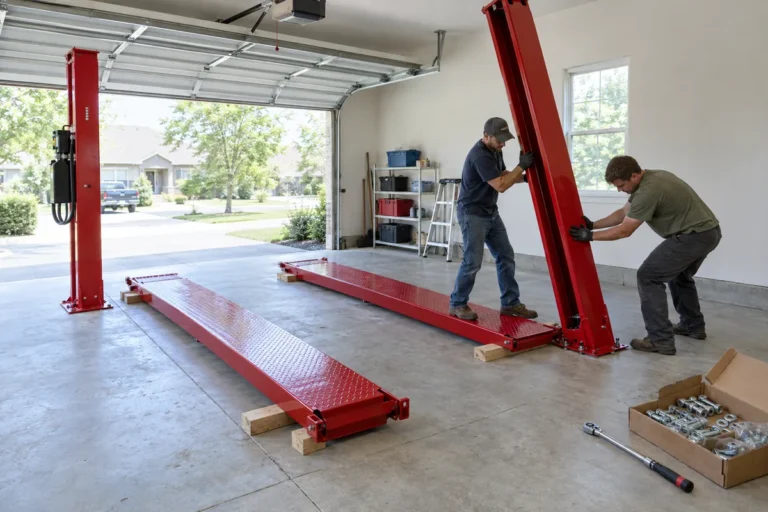
- Underbody Access and Subframe Labor: On many compact cars, SUVs, and transverse V6 engines, the AC compressor bolts to the bottom of the engine block behind the front subframe and radiator support. Accessing it safely requires lifting the vehicle, unbolting splash shields, and sometimes evacuating the cooling system or dropping the subframe. Home mechanics who install a 2-post lift in a home garage can reach underbody compressors comfortably, though federal law still requires professional refrigerant recovery before unbolting any pressurized lines.
- Warranty Coverage on Parts and Labor: Established independent repair shops—such as NAPA AutoCare Centers, AAA-Approved facilities, and local ASE-certified specialists—typically back complete AC compressor or evaporator repairs with a 12-month/12,000-mile or 24-month/24,000-mile nationwide warranty.
Frequently Asked Questions (FAQ)
Why is car air conditioning repair so expensive?
Car air conditioning repair is expensive because the system operates under high pressure (up to 300+ PSI) and requires EPA-certified recovery machines, specialized refrigerants like R-1234yf, and extensive labor. Major parts such as the evaporator core sit buried behind the dashboard, requiring 8 to 14 hours of labor, while a seized compressor contaminates multiple downstream components that must be replaced together.
How often does a car AC system need to be recharged?
A car AC system is a sealed loop and never requires routine recharging as part of scheduled maintenance. According to ASE service guidelines, if your air conditioner is low on refrigerant, the system has a physical leak in an O-ring, hose, Schrader valve, condenser, or evaporator. A technician should locate and repair the leak before recharging the system.
Can I drive my car if the AC compressor is bad?
You can drive with a bad AC compressor only if the pulley bearing still spins freely with the AC turned off. If the compressor clutch bearing seizes or locks up, the spinning rubber drive belt will burn and snap. Because that same belt drives your alternator and water pump, watch for signs of a failing serpentine belt and tensioner to avoid engine overheating and a roadside tow.
Does car insurance or an extended warranty cover AC repair?
Standard auto insurance only covers car AC repair if the damage happens in a covered collision or comprehensive event, such as hitting road debris or a deer that punctures the front AC condenser. Mechanical wear and tear—including leaking seals, worn compressors, or failed blower motors—is only covered by a factory bumper-to-bumper warranty or an explicit mechanical breakdown extended warranty.
How long does it take a mechanic to fix a car AC system?
A standard AC diagnostic, evacuate, and refrigerant recharge takes 1 to 1.5 hours at a repair shop. Replacing accessible underhood parts like a pressure switch, refrigerant hose, or blower motor takes 1.5 to 3 hours. Major repairs like a full compressor and condenser kit require 4 to 6 hours, while an in-dash evaporator core replacement takes 1 to 2 full days.
Is it worth fixing the AC on an older high-mileage car?
Fixing the AC on a high-mileage car makes financial sense if the issue is a $200 to $500 leak, relay, or blower motor, or if the vehicle has a solid engine and transmission. Before approving a $1,800 compressor overhaul on a car worth $3,500, pay a local mechanic $100 to $150 for a full vehicle inspection to confirm no major drivetrain repairs are looming.
Conclusion
Knowing how much does car air conditioning repair cost helps you budget realistically and have an informed conversation with your mechanic. Minor services like leak diagnostics, pressure switches, and R-134a recharges stay between $100 and $400, while R-1234yf recharges and hose replacements run $250 to $750. When a compressor seizes or a dashboard evaporator leaks, expect parts and labor to total $1,000 to $3,000+.
Never open a pressurized refrigerant line in your driveway or add stop-leak sealants to a modern HVAC system. Instead, schedule a pressure and UV-dye diagnostic with an ASE A7-certified local auto repair shop to pinpoint the exact leak and protect your compressor for years to come.