How to Measure Your Truck Bed for a Tonneau Cover (Step-by-Step + Pro Tips)
Buying a tonneau cover seems simple at first glance-just grab the size of your truck bed, right? Not quite. One wrong inch can lead to an ill-fitting cover, annoying returns, and costly restocking fees. I’ve seen it happen countless times in the garage: a truck owner is excited to upgrade their bed only to realize the cover doesn’t sit right, leaving them frustrated and out of pocket.
That’s why I wrote this guide. As an auto expert, I installed hundreds of tonneau covers and worked directly with truck owners, I’m going to show you the exact steps professionals use to measure a truck bed so your cover fits perfectly the first time.
This guide is for you if:
- You want to avoid buying the wrong tonneau cover.
- You’re installing your first cover and want to do it right the first time.
- You’re curious about how bed liners, wheel wells, and rail types affect fit.
If any of these sound familiar, keep reading-you’ll thank yourself when the cover slides on like it was custom-made for your truck.
Why Accurate Truck Bed Measurement Matters Before Buying a Tonneau Cover
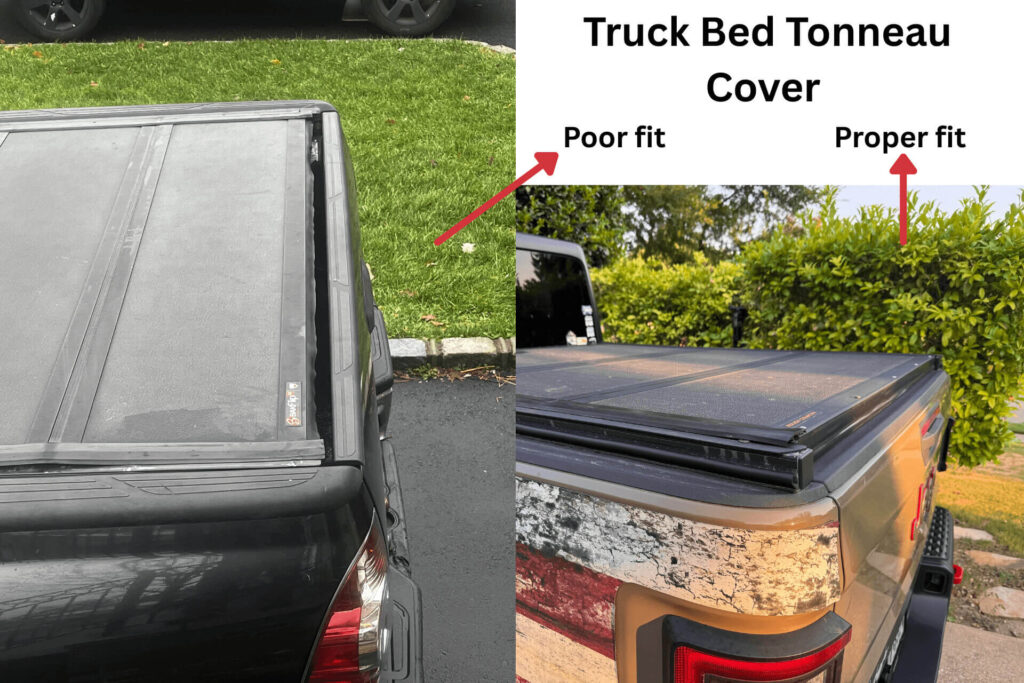
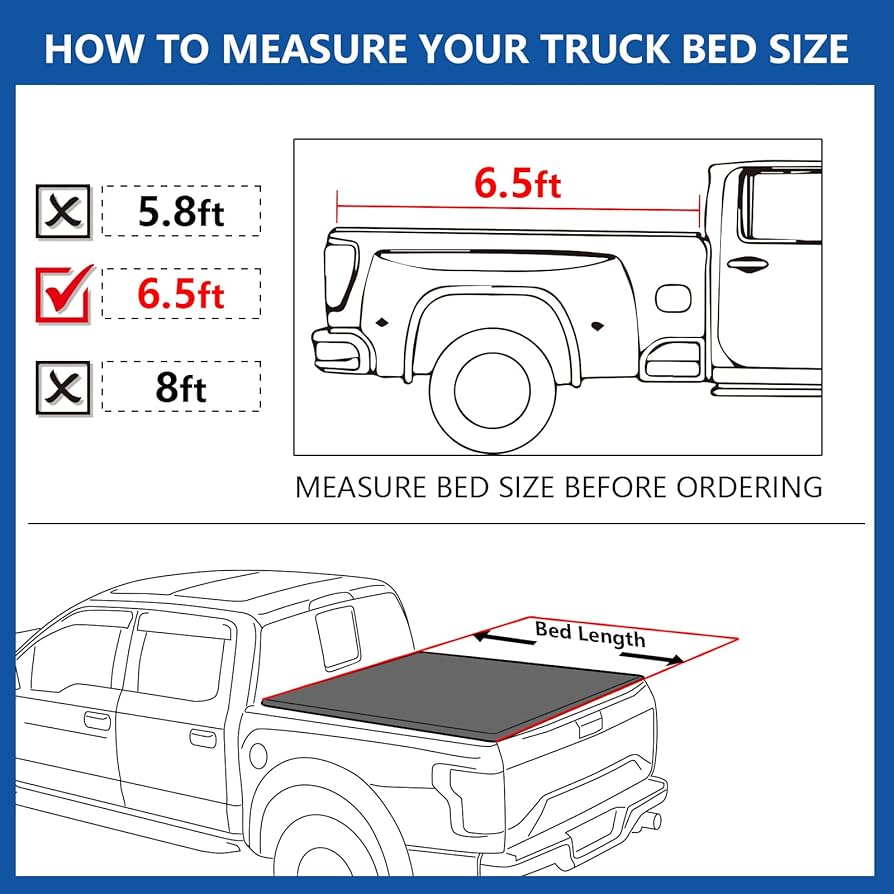
I get it—sometimes you glance at your truck bed and think, “It’s a standard 6.5-foot bed, so any cover labeled 6.5-foot should fit, right?” Not even close.
Covers Are Model-Specific
Not all tonneau covers are universal. Each manufacturer designs their covers to match the exact contours, rail thickness, and mounting style of specific truck models. Even if two trucks share a nameplate, their beds might have subtle differences that affect fit. A misfit can cause rattling, gaps, and in some cases, void the cover’s warranty.
Bed Length Names Can Be Misleading
Bed lengths like 5.5 ft, 6.5 ft, or 8 ft are helpful shorthand—but they rarely tell the whole story. Two “6.5-foot” beds can differ by half an inch or more, which might not sound like much—but that half-inch can stop a cover from locking properly or sealing against water.
Even the Same Model Can Vary
Truck manufacturers sometimes change bed designs mid-year or across trims. Factors like wheel well placement, bed rail thickness, or integrated tie-downs can make one 2023 F-150 different from another 2023 F-150. That’s why relying solely on advertised bed length is a gamble.
What Happens If You Get the Wrong Size
Getting the wrong size cover isn’t just an inconvenience—it impacts your truck in multiple ways:
- Poor Sealing: Water, snow, and debris can leak inside, damaging your cargo.
- Security Risks: An ill-fitting cover can be forced open or won’t lock properly.
- Aesthetic Issues: Gaps or overhangs look sloppy and can reduce resale value.
- Increased Wear: The cover may flex, flap, or wear unevenly, shortening its lifespan.
Quick Checklist for Proper Fit
- Measure your bed length, width, and depth carefully
- Check wheel wells, rail thickness, and bed liners
- Compare measurements against the cover manufacturer’s specifications
- Double-check model year and trim differences
What You Need Before Measuring Your Truck Bed
Before you grab a tonneau cover and hope it fits, preparation is everything. Measuring a truck bed accurately isn’t complicated—but skipping the prep can lead to errors that cost time, money, and frustration. Here’s what you’ll need to get it right:
Tape Measure (Minimum 8 ft): A sturdy, metal tape measure is best option to Measuring Your Truck Bed. If You want something long enough to stretch from the bulkhead to the tailgate without bending or sagging.
Flat, Stable Surface: Park your truck on a level surface. Even a slight tilt can affect measurements, especially for longer beds. Accuracy is key, and the floor or driveway should be flat enough to keep your tape straight.
Helper (Optional but Recommended): Measuring a truck bed solo is possible, but a second set of hands makes life much easier. A helper can hold the tape tight across the bed, ensure it stays straight, and read measurements while you record them. It’s a small step that prevents errors.
Notepad or Phone: Record every measurement immediately. Don’t rely on memory—a quick note on your phone or a scribble in a notebook will save headaches when comparing your numbers to cover specifications later.
How to Measure a Truck Bed for a Tonneau Cover (Step-by-Step Guide)
Getting the right tonneau cover starts with accurate measurements. In my experience, a small mistakes that lead to misfit covers. Follow these steps carefully, and you’ll avoid costly frustration.
Step 1 – Measure the Truck Bed Length (Most Important)
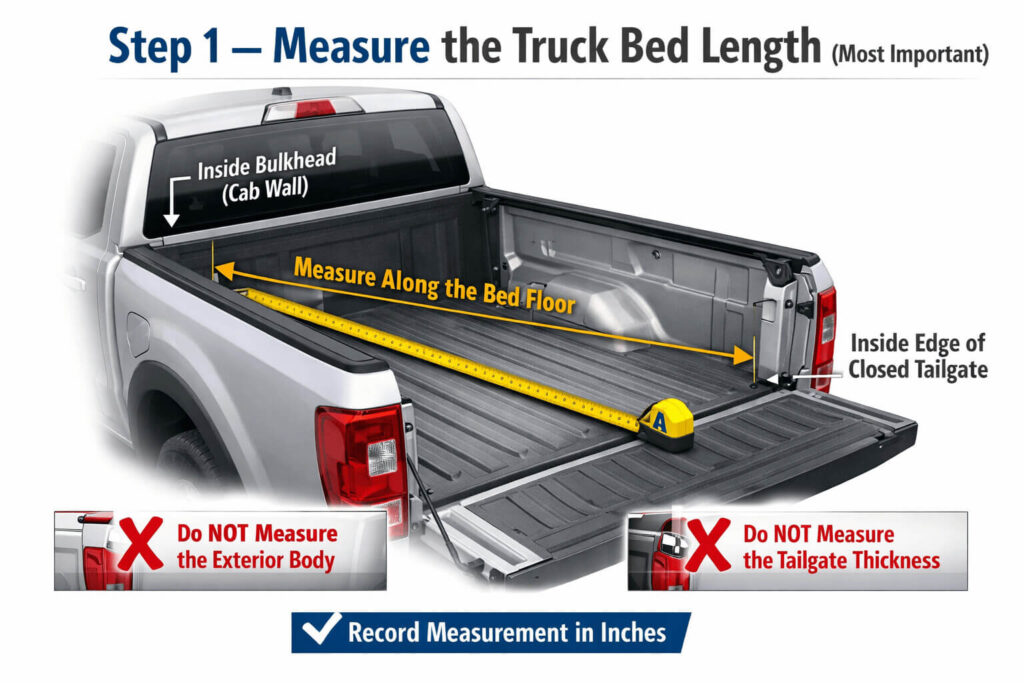
The bed length is the single most critical measurement when choosing a tonneau cover. One wrong inch here can prevent your cover from fitting correctly. Here’s exactly how to do it right:
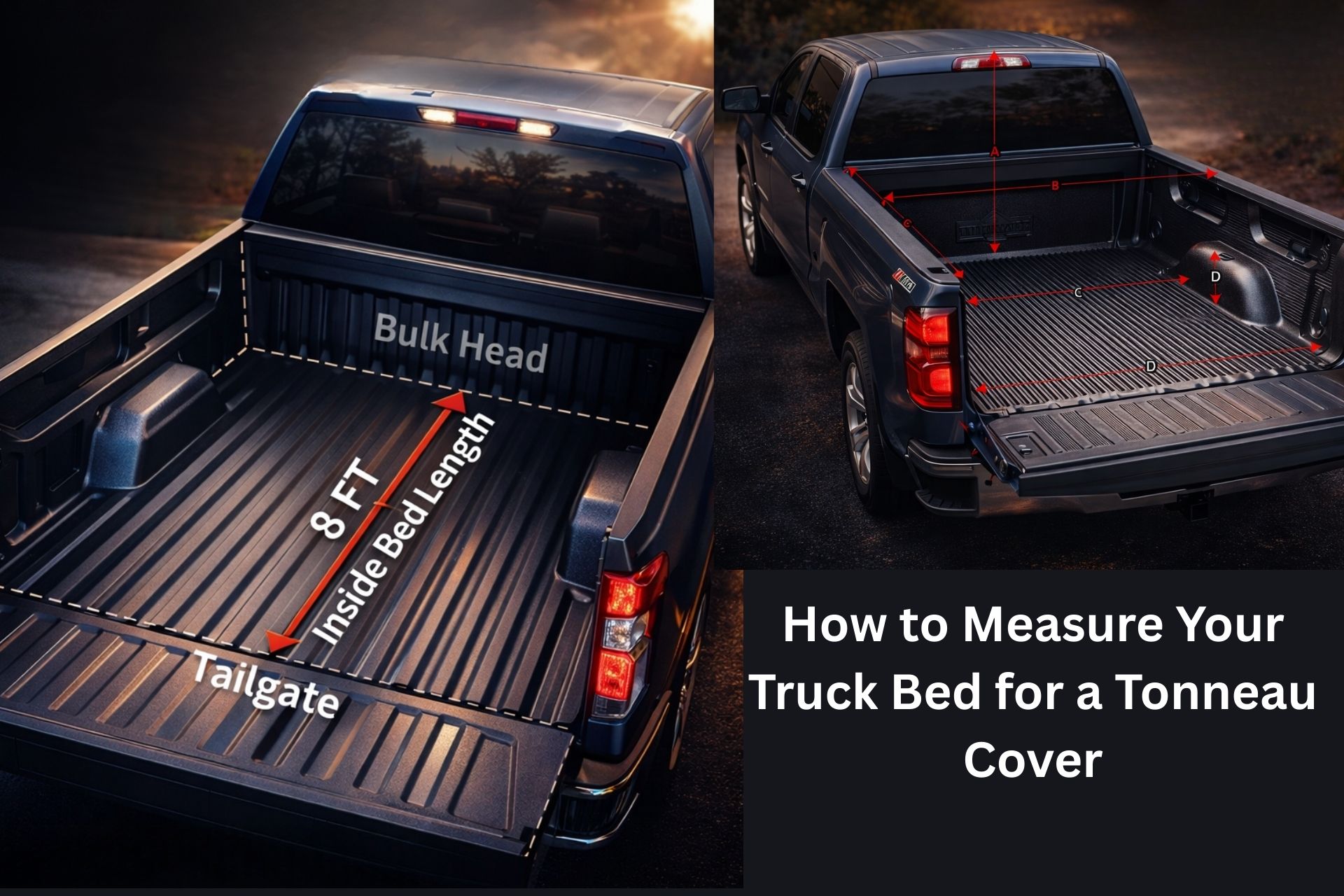
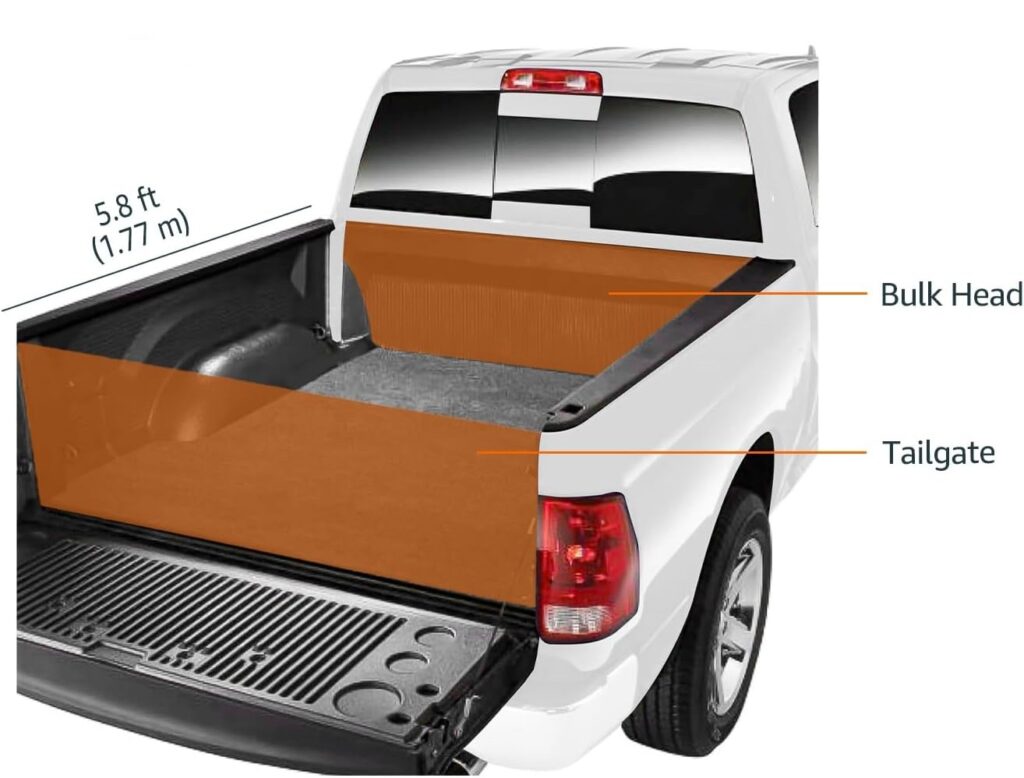
Start at the Inside Bulkhead (Cab Wall): Place the start of your tape measure flush against the inside of the bulkhead—that’s the wall of your truck bed closest to the cab. Do not start from the exterior of the truck; the body panels add extra inches that will throw off your measurement.
Measure to the Inside Edge of the Tailgate: With the tailgate closed, stretch your tape to the inside edge of the tailgate. Again, avoid measuring over the top or along the exterior.
Measure Along the Bed Floor: Lay the tape along the flat floor of the bed. This ensures you account for the actual space the cover will sit over.
Record Your Measurement in Inches: Note it immediately in your notepad or phone—precision matters. Truck bed lengths often differ by half an inch or more, so exact numbers make a huge difference.
Step 2 – Measure the Truck Bed Width
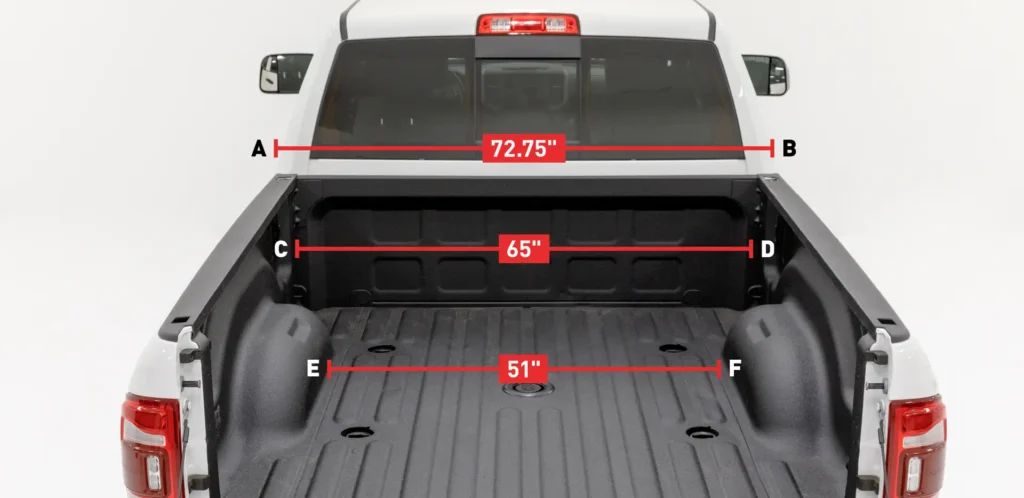
After length, width is the next most important measurement for a tonneau cover. Width determines whether your cover sits snugly on the rails and seals properly—skip this step, and you could end up with flapping, gaps, or mounting issues.
Measure Inside the Bed Rails: Place your tape measure inside the top edges of the bed rails—not over them. This gives you the actual space the cover will span.
Measure Near the Tailgate: Start at one rail, stretch the tape across to the other, and record the width near the tailgate.
Measure Again Near the Cab: Repeat the measurement near the bulkhead (cab wall).
Use the Widest Number: Some truck beds taper slightly from cab to tailgate. Always use the widest measurement for ordering your cover to ensure proper fit and clamp alignment.
Step 3 — Measure the Truck Bed Depth
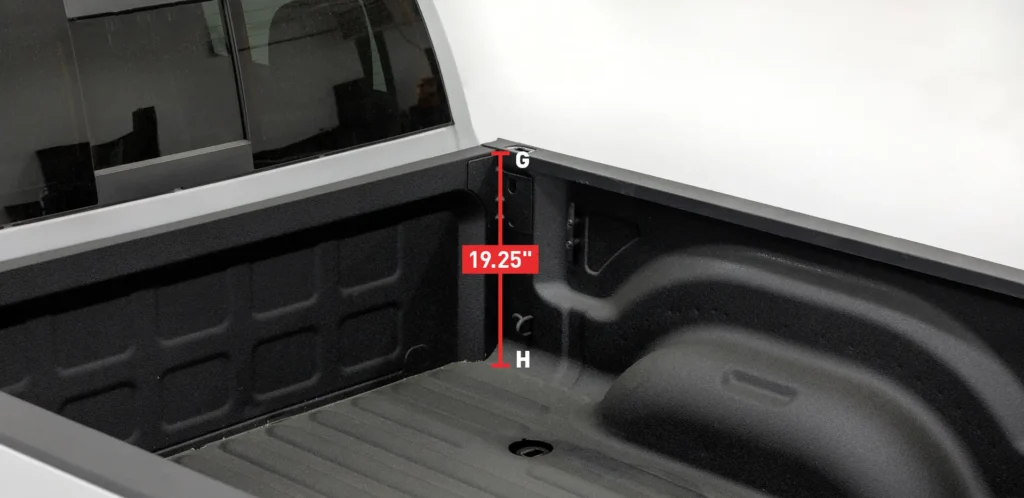
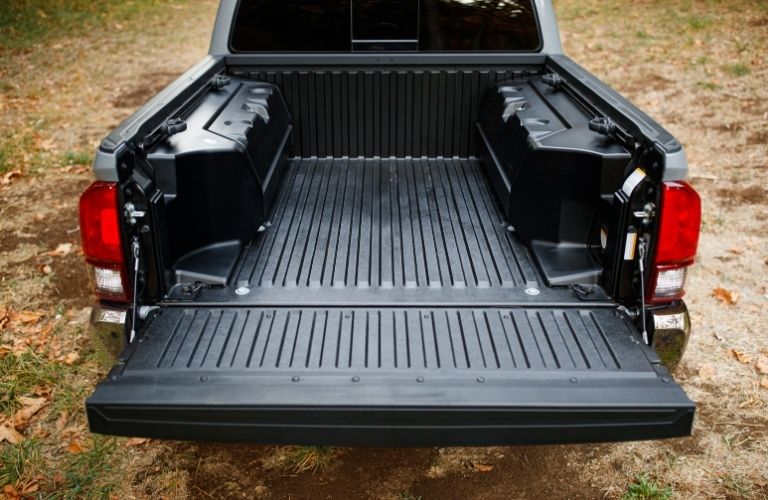
Width and length are essential, but bed depth is just as critical, especially if you’re choosing a low-profile tonneau cover or planning to fit a toolbox. Depth determines how the cover sits relative to your bed rails and floor, and ignoring it can create gaps or prevent proper installation
Measure from the Top of the Rail to the Bed Floor: Place your tape at the top edge of the bed rail and measure straight down to the floor of the bed. Make sure the tape is perpendicular to the floor to avoid inaccurate readings.
Include Bed Liner Thickness (if applicable): If you have a drop-in bed liner or spray-on liner, add its thickness to your measurement. Some liners can add up to 0.5 inches, which matters for in-rail or low-profile covers.
Standard Truck Bed Sizes (And What They Really Mean)
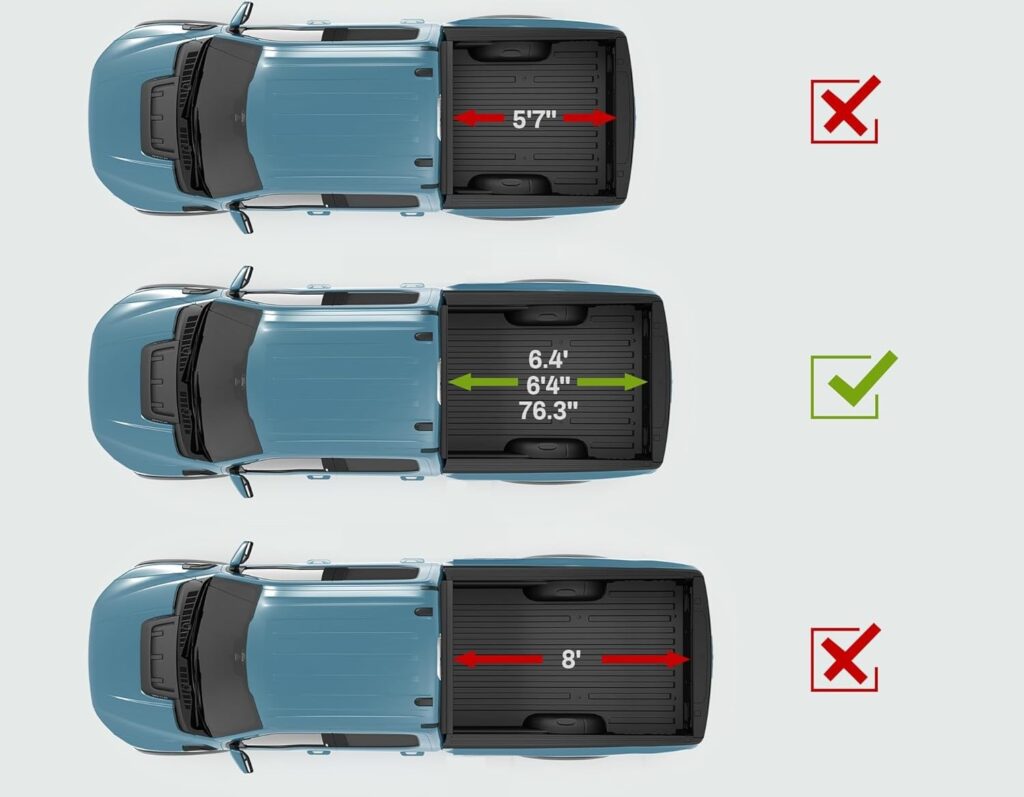
Truck manufacturers love using shorthand names for bed lengths—5.5 ft, 6.5 ft, 8 ft—but as we’ve covered, these numbers don’t always match the actual usable bed length. Knowing the real dimensions helps you pick a tonneau cover that fits perfectly.
Here’s a quick reference table showing common truck bed names vs their measured length along the bed floor:
| If your truck bed measures… | Then your tonneau cover will be… |
| 60 Inches | 5 feet long |
| 66 Inches | 5 feet 6 inches long |
| 68 Inches | 5 feet 8 inches long |
| 72 Inches | 6 feet long |
| 78 Inches | 6 feet 6 inches long |
| 96 Inches | 8 feet long |
Truck Bed Measurement by Brand
If you’d rather not run outside with a tape measure-or if you’re ordering a gift and don’t have direct access to the recipient’s truck—this cheat sheet has you covered. It lists bed measurements for top North American pickups, including midsize, half-ton, and heavy-duty models. All measurements are for the 2024 model year.
Ford Ranger Truck Bed Tonneau Cover Size
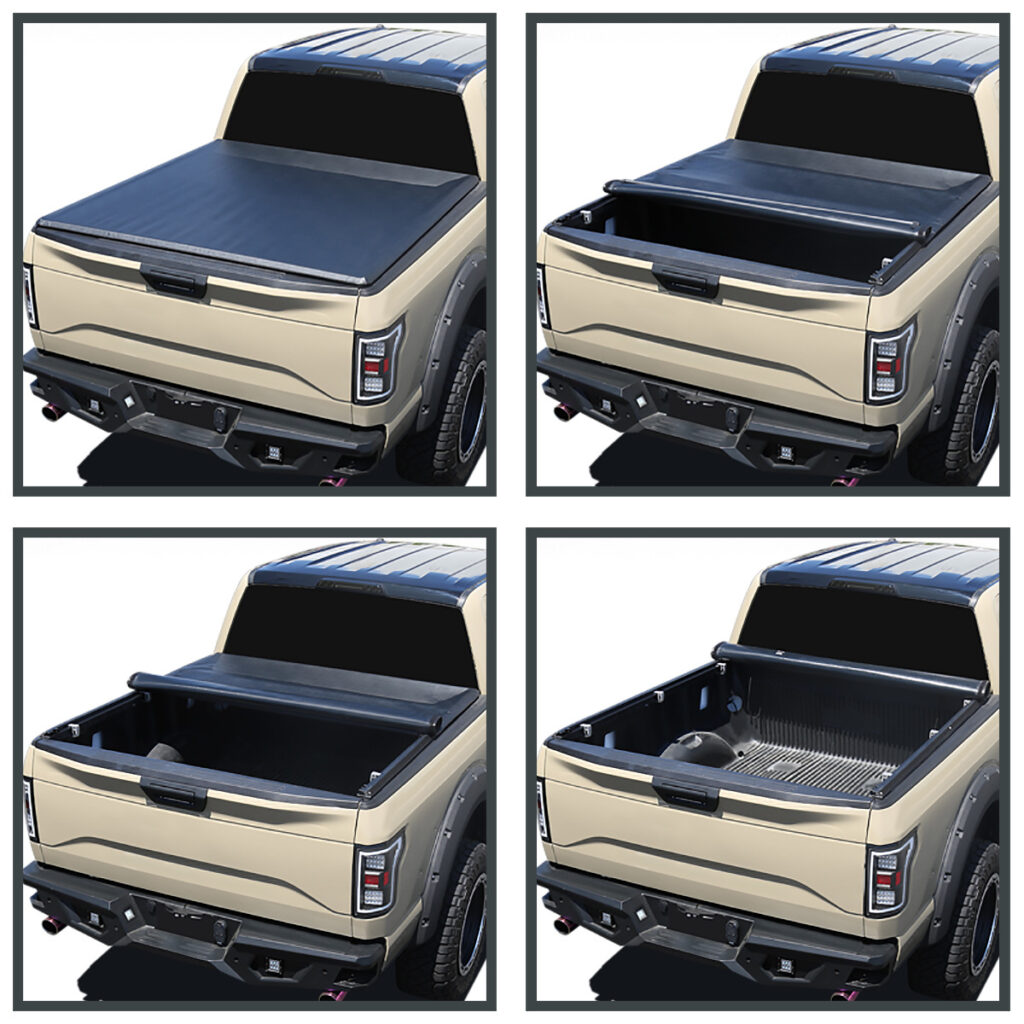
| Advertised Length | Bed Length (in) | Width Between Wheelhouses (in) | Bed Depth (in) |
| 5’ | 59.6 | 44.8 | 20.8 |
Ford F-150 Truck Bed Tonneau Cover Size
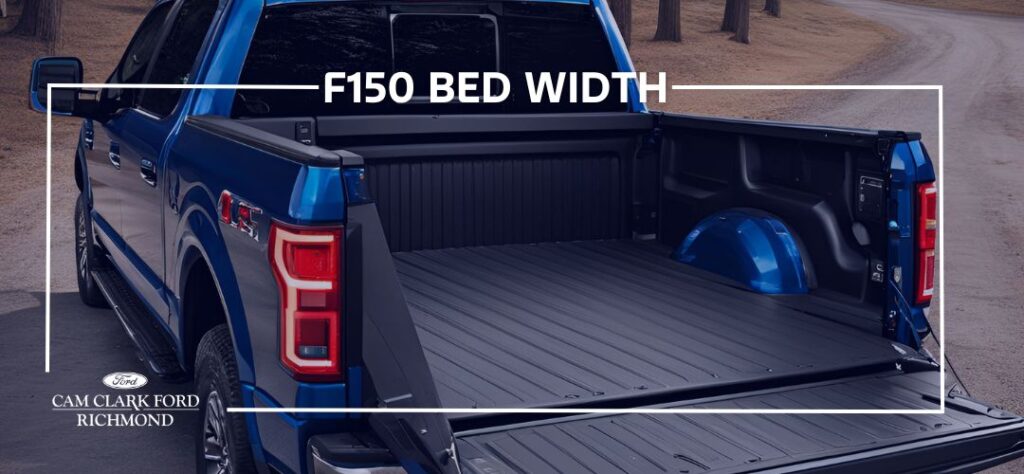
| Advertised Length | Bed Length (in) | Width Between Wheelhouses (in) | Bed Depth (in) |
| 5.5’ | 67.1 | 51.1 | 21.4 |
| 6.5’ | 78.9 | 51.1 | 21.4 |
| 8’ | 97.6 | 51.1 | 21.4 |
Ford F-150 Bed Specs for Tonneau Covers
| Bed Length | Inside Length (in) | Inside Width (rails, in) | Depth (rail to floor, in) | Volume (cu ft) |
|---|---|---|---|---|
| 5.5-ft Styleside | 67.1 vdm.ford+1 | 65.2 max, 50.6 wheel wells | 21.4 | 52.8 |
| 6.5-ft Styleside | 78.9 vdm.ford+1 | 65.2 max, 50.6 wheel wells | 21.4 | 62.3 |
| 8-ft Styleside | 97.6 vdm.ford+1 | 65.2 max, 50.6 wheel wells | 21.4 | 77.4 |
Ford Super Duty (F-250, F-350) Truck Bed Tonneau Cover Size
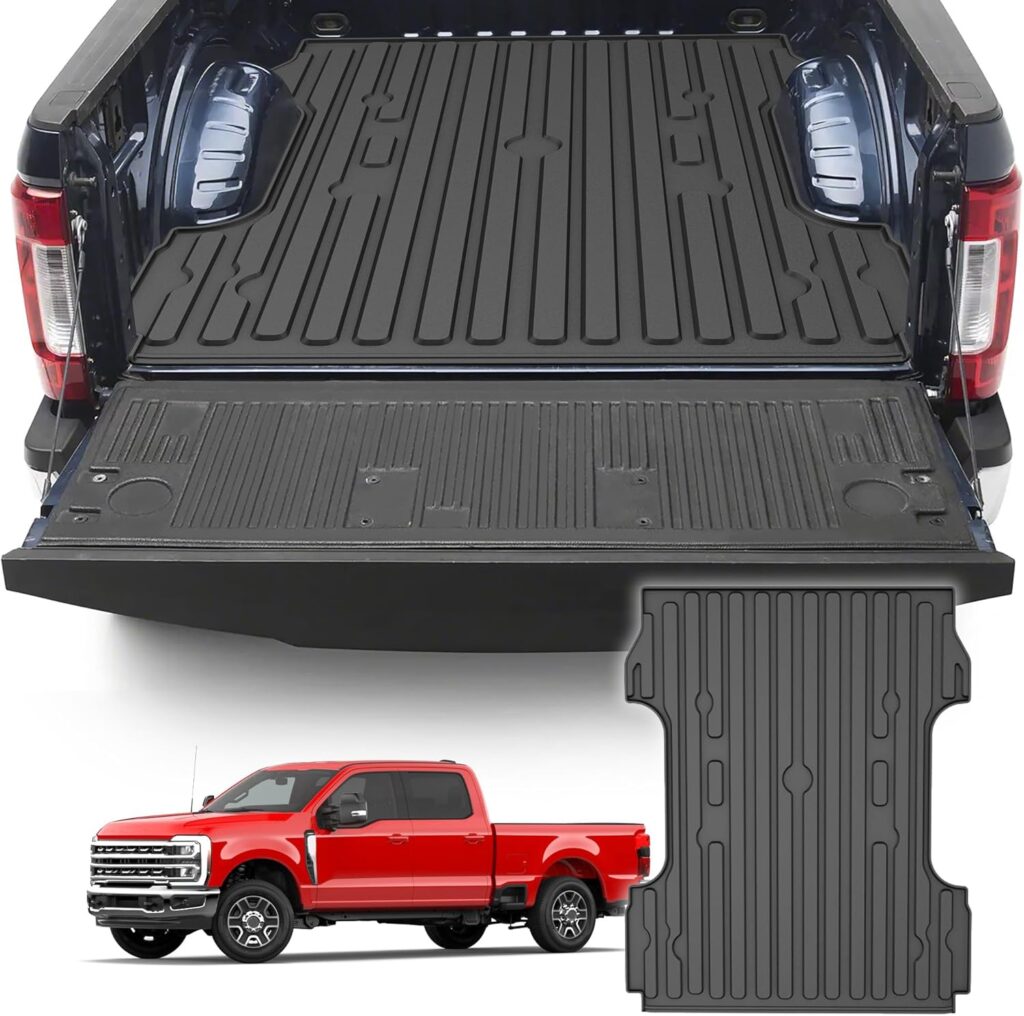
| Advertised Length | Bed Length (in) | Width Between Wheelhouses (in) | Bed Depth (in) |
| 6.75’ | 81.9 | 50.5 | 21.2 |
| 8’ | 98.1 | 50.5 | 21.2 |
Chevy Colorado / GMC Canyon Truck Bed Tonneau Cover Size
| Advertised Length | Bed Length (in) | Width Between Wheelhouses (in) | Bed Depth (in) |
| 5’ | 61.7 | 45.5 | 20 |
Chevy Silverado / GMC Sierra 1500 Truck Bed Tonneau Cover Size
| Advertised Length | Bed Length (in) | Width Between Wheelhouses (in) | Bed Depth (in) |
| Short | 69.92 | 50.63 | 22.4 |
| Standard | 79.44 | 50.63 | 22.4 |
| Long | 98.18 | 50.63 | 22.4 |
Chevy Silverado / GMC Sierra HD (2500, 3500) Truck Bed Tonneau Cover Size
| Advertised Length | Bed Length (in) | Width Between Wheelhouses (in) | Bed Depth (in) |
| Standard | 82.25 | 51.85 | 21 |
| Long | 98.18 | 51.85 | 21 |
RAM 1500 Truck Bed Tonneau Cover Size
| Advertised Length | Bed Length (in) | Width Between Wheelhouses (in) | Bed Depth (in) |
| 5’7” | 67.4 | 51 | 21.5 |
| 6’4” | 76.3 | 51 | 21.5 |
RAM HD (2500/3500) Truck Bed Tonneau Cover Size
| Advertised Length | Bed Length (in) | Width Between Wheelhouses (in) | Bed Depth (in) |
| 6’4” | 76.3 | 51 | 20.2 |
| 8’ | 98.3 | 51 | 20.2 |
Toyota Tacoma Truck Bed Tonneau Cover Size
| Advertised Length | Bed Length (in) | Width Between Wheelhouses (in) | Bed Depth (in) |
| 5’ | 60.3 | 44.7 | 21.2 |
| 6’ | 73.5 | 44.7 | 20.2 |
Toyota Tundra Truck Bed Tonneau Cover Size
| Advertised Length | Bed Length (in) | Width Between Wheelhouses (in) | Bed Depth (in) |
| 5.5’ | 65.6 | 48.7 | 20.9 |
| 6.5’ | 77.6 | 48.7 | 20.9 |
| 8.1’ | 96.5 | 48.7 | 20.9 |
Soft vs Hard Tonneau Covers — Does Measurement Change?
Not all tonneau covers are created equal when it comes to measurement sensitivity. The type of cover you choose affects how precise your measurements need to be—and getting it wrong can lead to poor fit, water leaks, or installation headaches.
Here’s a quick details:
| Cover Type | Measurement Sensitivity |
| Soft Roll-Up | Slight tolerance |
| Hard Folding | Very strict |
| Retractable | Extremely strict |
Common Truck Bed Measurement Mistakes
Even small mistakes when measuring your truck bed can lead to a tonneau cover that doesn’t fit, leaving you frustrated and potentially out of money. I’ve seen it countless times in the garage: buyers rely on assumptions instead of measurements and end up with returns, restocking fees, or ill-fitting covers. Here are the top mistakes to avoid
Measuring the Outside Body: Your truck’s exterior adds extra inches that don’t matter for cover fit. Always measure inside the bed rails—measuring the outside of the truck will give numbers that are too large and create a cover that overhangs or doesn’t seal.
Measuring With the Tailgate Open: Some truck owners measure from cab to the end of an open tailgate. This is a common error. Always measure with the tailgate closed, because that’s how your cover will sit and seal.
Ignoring Bed Liners: Drop-in or spray-in liners add thickness to the bed floor or rails. Failing to include them in your measurements can make the cover sit too high or not lock properly, especially with in-rail or low-profile covers.
Guessing Based on Model Year: Even trucks of the same year and trim can have small dimensional differences. Don’t assume your F-150’s bed is identical to another F-150 from the same year—always measure your own truck.
Using Dealer Brochure Dimensions: Manufacturer brochures often list approximate bed lengths that don’t account for trim, rail design, or bed liners. Relying on brochure numbers can lead to covers that are too short, too long, or don’t seal correctly.
Quick Truck Bed Measurement Checklist
Before you hit “Add to Cart” on a tonneau cover, it’s smart to double-check your measurements. This simple checklist ensures you haven’t skipped any critical steps and helps avoid returns or fit issues.
- Tailgate Closed — Always measure with the tailgate fully closed for accurate length.
- Inside Rail Measurement — Measure inside the bed rails, not the exterior body, for width.
- Liner Included — Include drop-in or spray-in liner thickness in both width and depth.
- Width Measured Twice — Measure near both the tailgate and the cab; use the widest number.
- Depth Recorded — Measure from the top of the rail to the bed floor for proper cover compatibility.
Frequently Asked Questions
This FAQ section covers the most common questions truck owners have when measuring for a tonneau cover. Think of it as a quick reference to prevent mistakes before ordering.
Do I include the tailgate when measuring my truck bed?
No. Always measure with the tailgate closed and from the inside of the bulkhead to the inside edge of the tailgate. Including the tailgate adds extra inches that prevent proper fit and sealing.
Should I measure in inches or feet?
Always measure in inches. Tonneau cover dimensions are precise, and half-inch differences can matter—feet alone are too rough for accurate ordering.
What if my measurement is slightly different from the listed cover size?
Always round up to the nearest specification the cover allows. For soft covers, slight differences are usually fine; for hard or retractable covers, exact measurements are critical.
Can I use manufacturer bed specs instead of measuring myself?
No. Dealer brochures or spec sheets often list approximate dimensions. Always measure your own truck—even the same model and year can have slight differences.
Do bed rails and tie-downs affect tonneau cover fit?
Yes. Rails, tie-downs, and bed liner thickness all affect how the cover clamps and seals. Include them in your measurements, especially for in-rail or hard covers.
Does bed depth matter for all tonneau covers?
Not for every cover. Soft roll-up covers are forgiving, but hard folding and retractable covers need precise depth measurements to sit flush and lock properly.
Can I install a tonneau cover if I have a spray-in liner?
Absolutely. Just measure with the liner installed, including its thickness in your depth and width measurements. Many manufacturers design covers to accommodate liners, but exact numbers matter.
Final Buying Advice – Ensure the Perfect Fit
Accurate truck bed measurements are the foundation of a hassle-free tonneau cover purchase. Taking the time to measure your bed correctly-including length, width, depth, and any liners, wheel wells, or accessories-ensures the cover fits precisely, performs as intended, and protects your cargo without issue.
Skipping this step can lead to gaps, poor sealing, or even costly returns. By measuring carefully and following the steps in this guide, you can select a cover with complete confidence, knowing it will install easily, look great, and last for years. A few minutes of attention now saves hours of frustration later, giving you a perfect fit the first time.